
Color Modulation: Difference between revisions
No edit summary |
|||
| Line 2: | Line 2: | ||
== Modes == | == Modes == | ||
There are 6 modes used in FFL. | There are 6 modes used in FFL.<ref>https://github.com/ariankordi/ffl/blob/97eecdf3688f92c4c95cecf5d6ab3e84c0ee42c0/include/nn/ffl/FFLModulateParam.h#L11</ref> | ||
=== Constant === | === Constant === | ||
Revision as of 23:37, 23 September 2025
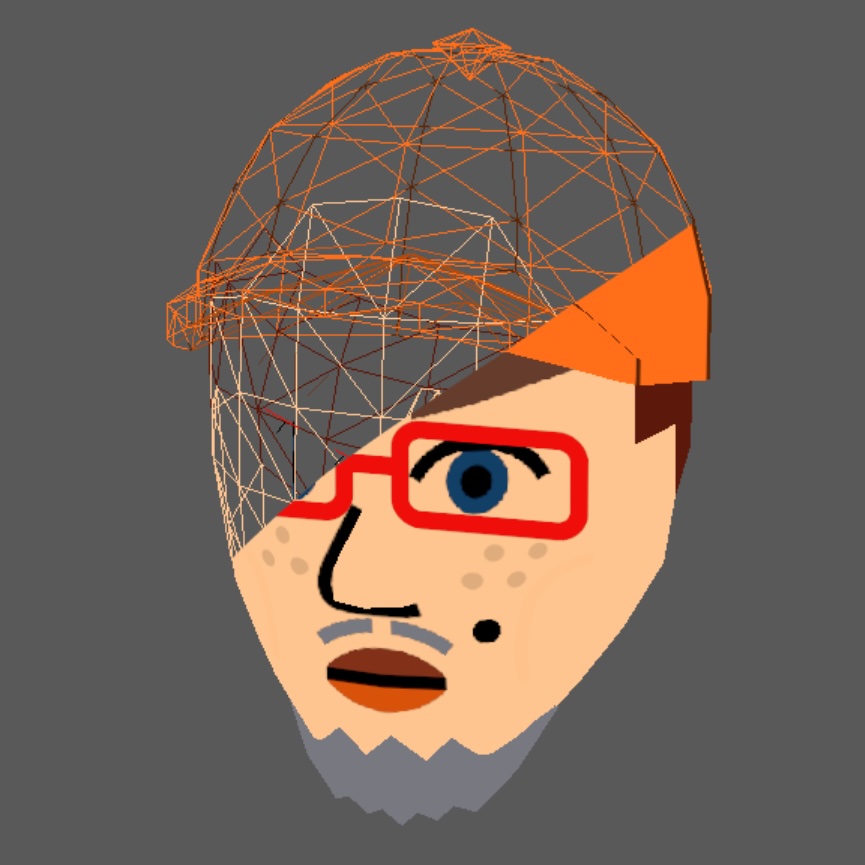
Color modulation is the process in which a texture is modified to add color. There are various strategies used by face libraries. In general, textures are split into color channels, and each channel is filled with a respective color.
Modes
There are 6 modes used in FFL.[1]
Constant
For textures where only one color replacement is needed. The red channel is colorized.
Used by: ShapeBeard, ShapeNose, ShapeForehead, ShapeHair, Fill
rgb = ColorR
a = 1.0
Texture Direct
For textures where no color modulation is required. The texture is “passed through” the shader with no modifications.
Used by: FaceMake, ShapeFaceline, ShapeMask
rgb = TextureRGB
a = TextureA
Rgb Layered
For textures where multiple colors need to be filled.
Used By: Mouth, Eye
rgb = ColorR * TextureR + ColorG * TextureG + ColorB * TextureB
a = TextureA
Alpha
For textures where there is a single color that needs to be filled, and an alpha channel.
Used by: Mustache, Eyebrow, Mole, FaceLine, FaceBeard, ShapeNoseline
rgb = ColorR * TextureR
a = TextureR
Luminance Alpha
For textures that need to fill two colours, and alpha Used by: ShapeGlass
r = ColorR * TextureG
a = TextureR
Alpha Opaque
Single-channel modulation with an opaque background.
Used by: ShapeCap
rgb = ColorR * TextureR
a = 1.0